

 Skip to content
Depression can affect far more than mood. It can change sleep, focus, motivation, appetite, relationships, and the ability to feel present in daily life. For people who have tried traditional treatment options without enough relief, the search for additional support can feel deeply personal and sometimes exhausting.
At Elite Medical Aesthetics, Ketamine Infusion Therapy is offered as part of a supportive wellness approach for patients seeking emotional balance, mental clarity, and additional care options. For those considering Ketamine Infusion Therapy in Las Cruces, NM, understanding why doctors may recommend it can help you make a more informed and confident decision.
Who may consider ketamine infusions for emotional wellness support?
Ketamine infusions may be considered for adults struggling with depression, low mood, anxiety, stress-related symptoms, PTSD-related concerns, chronic pain, or treatment-resistant symptoms under professional medical supervision.
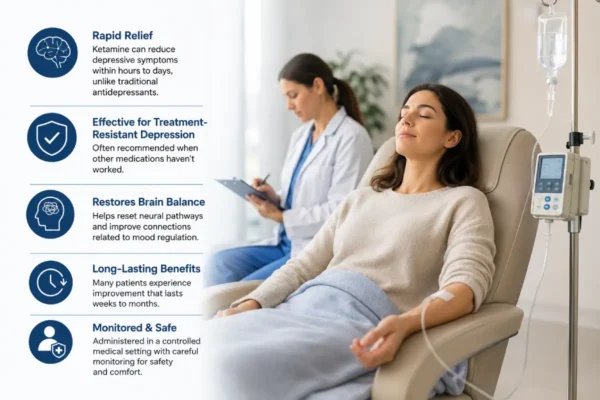
Ketamine Infusion Therapy is a medically supervised treatment that delivers a carefully controlled dose of ketamine through an IV infusion. Ketamine has long been used in medical settings. In recent years, it has gained attention for its potential role in supporting certain mental health concerns, including depression and treatment-resistant symptoms.
Unlike many traditional depression treatments that focus mainly on serotonin or similar pathways, ketamine works differently. It interacts with the brain’s glutamate system and may help support healthier communication between neural pathways. For some patients, this different mechanism is one reason doctors may consider ketamine when other options have not provided enough relief.
Doctors may recommend Ketamine Infusion Therapy because depression is not the same for every person. Some people respond well to traditional medication and therapy. Others may continue to experience low mood, emotional heaviness, loss of motivation, or mental fog despite trying several treatment plans.
Ketamine may be considered when a patient needs another option under medical supervision. It may support emotional balance, calm, and clearer thinking for some individuals. The goal is not to promise a cure, but to provide a carefully monitored treatment that may help when standard approaches have not been enough.
Depression is complex. It can involve brain chemistry, stress response, trauma history, inflammation, sleep disruption, chronic pain, genetics, lifestyle factors, and emotional patterns. Because so many systems can be involved, one treatment path does not work for everyone.
This is why doctors often look at the full picture. If someone has not improved with standard options, the provider may consider treatments that work through different pathways. Ketamine Infusion Therapy may be part of that larger care conversation, especially when a patient is seeking support for treatment-resistant symptoms.
Many traditional antidepressants may take weeks to build their full effect. Ketamine works through a different system and may affect neural communication more quickly for some people.
Ketamine interacts with NMDA receptors and the glutamate system, which are involved in learning, memory, mood regulation, and neural flexibility. This may help the brain form healthier communication patterns. Some patients describe feeling calmer, clearer, or more emotionally flexible after treatment. Results vary, and ketamine should always be used in a supervised setting with realistic expectations.
The Key Benefits of Ketamine Infusions may include emotional support, a quicker sense of relief for some patients, personalized care, little to no extended downtime for many people, clearer thinking, and ongoing support through a treatment plan.
Some patients appreciate that each infusion can be adjusted based on comfort level and provider guidance. This individualized care matters because mental wellness treatments should not feel generic. Ketamine may also support people dealing with depression, anxiety, stress-related symptoms, chronic pain, PTSD-related responses, and treatment-resistant concerns. The exact recommendation depends on medical history and provider evaluation.
One reason doctors may recommend ketamine is its potential to support mood improvement. Patients with depression may feel stuck in patterns of sadness, emotional numbness, low motivation, or mental heaviness.
Ketamine may help support neural communication in a way that allows some patients to experience a shift in mood or perspective. This does not mean everyone feels immediate or dramatic change, but some people do report feeling lighter or more mentally clear after sessions. Because every patient responds differently, ongoing assessment is important.
Treatment-resistant depression can be especially difficult. A person may have tried therapy, lifestyle changes, medication, or other options and still feel that symptoms remain.
Doctors may consider Ketamine Infusion Therapy as an additional option when previous approaches have not provided adequate relief. It may be used as part of a broader care plan that includes continued mental health support, medical follow-up, and healthy routines. This makes ketamine a meaningful option for some patients, but not a first-step solution for everyone.
Depression can make thinking feel slow, foggy, or heavy. Patients may struggle to focus, make decisions, or feel mentally present.
Ketamine infusions may help some people experience a clearer mental state. At Elite Medical Aesthetics, the treatment is described as a calming, supportive wellness infusion that promotes emotional balance and mental clarity. This clarity may help patients feel more engaged in other parts of their wellness plan, such as therapy, self-care, sleep routines, or daily responsibilities.
Although the title focuses on depression, many patients experience depression alongside anxiety or chronic stress. These concerns can overlap, making daily life feel harder.
Ketamine Infusion Therapy may help promote a calmer emotional state for some individuals. This can be especially valuable for people who feel overwhelmed, tense, or stuck in stress-related patterns. A provider can help determine whether symptoms are appropriate for ketamine support or whether another treatment path may be safer or more effective.
Trauma-related symptoms can affect mood, sleep, emotional regulation, and sense of safety. For some patients, standard treatment may not fully address the emotional and nervous system impact of trauma.
Ketamine may offer supportive benefits for individuals navigating PTSD-related concerns when recommended by a qualified provider. It should not replace trauma-informed therapy or comprehensive care, but it may be considered as part of a wider treatment plan. Safety, comfort, and emotional support during sessions are especially important for these patients.
Experts may recommend Ketamine Infusion Therapy for depression because it works differently from many traditional treatments and may offer support for people who have not found enough relief through standard options. It may help promote emotional balance, mental clarity, and calmer mood patterns in a medically supervised setting.
At Elite Medical Aesthetics, treatment is centered on comfort, support, and individualized care. To learn whether ketamine infusion therapy may be appropriate for your needs, schedule your appointment today.